Real-time crime center & video management

See what matters.Prove who saw it.Act on it.

We hold partnerships with security agencies — so when an alert is high risk, an enrolled school or estate can call one. Conduxe watches the cameras you already own, tells you within seconds when something matters, and puts every look on the record. We don't just monitor, we allow you to act on it.

Built for sites on eSIM and Starlink. Nigeria first.

Fig. 00Drawn mock-up of the console with sample data — not a screenshot, and not a customer. A high-risk alert carries a call to a partner agency; every control that spends bandwidth prints its price.

Nothing you own changes

It sits beside your recorder. It does not replace it.

You have already paid for the cameras and the recorder. What you have not got is anybody watching them at 3am, and nobody obvious to call when they see something. Rip-and-replace is why most of these projects die in procurement, so we don't do it — the box plugs in next to the recorder you already bought, subscribes to the same camera streams, and reads them alongside it. Your recorder keeps recording, on its own schedule, to its own disk.

No re-cabling. No standardizing on one camera brand — anything speaking ONVIF or RTSP is fair game, and for the stubborn units that ignore discovery you can type the stream URL in by hand. Unplug our box tomorrow and your recorder carries on exactly as it did this morning.

Illustration: a small dark appliance sits on a shelf next to a larger rack-mount video recorder. A single rust-colored cable runs between them; two thin lines lead off the top of the frame toward cameras.
Fig. 01The box beside the recorder. Illustration, not a photograph — the hardware spec is not final.

How it works

Three steps. Most systems stop after two.

Something happens. You are told within seconds. You look, and the look is written down. Then you call a security agency — because being informed is not the same as being helped.

There is no data-center round trip in the detection path — the thinking happens on site, where the video already is, which is why it keeps working when the link doesn't. A dropped connection costs you the notification, not the detection, and the notification arrives the moment the link comes back. Getting to that point takes one power lead, one network lead and about twenty minutes beside the recorder you already own.

Illustration: three pole-mounted cameras along a fence line, each with a rust-colored cone of view, with dotted lines running from all three back to a single small dark box.
Fig. 02Every camera on the site network feeds the same box.
01

It sees it, where it happens

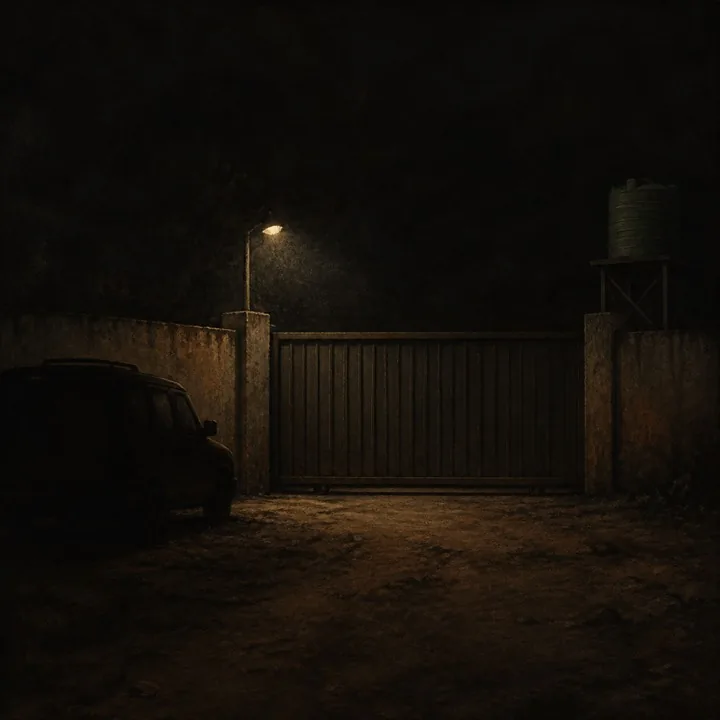
Detection runs on the box itself, on your premises, on every camera you point it at. It is tuned for what actually happens here — a vehicle stopped at a school gate after dark, people on a fence line at 3am — not an office-park default.

Seconds, not minutes · keeps working while the link is down

02

You look, and the look is recorded

Only the finding goes up the link: a short record and a small thumbnail. The full clip and the live stream stay at the site until a named person asks for them — and the asking is written down before the video is served.

Phone first · you know what you are looking at, and so does the log

03

You call the response

A notification on its own leaves you awake, certain and alone. So we hold partnerships with security agencies: schools and private estates that enroll can call an agency when a high-risk alert comes in. We don't just monitor, we allow you to act on it.

High-risk alerts · enrolled schools and estates

Chain of custody

A proper record of who looked, and who called it in.

This is the part nobody else wants to talk about. A camera system is a surveillance capability handed to a group of people, and the only thing that makes it safe is knowing exactly which of them used it, when, and on whom.

So the record is written before the video is served, never after. Every entry seals the one before it with a SHA-256 hash, which means an entry cannot be edited or quietly dropped without breaking every link that follows. And if the record cannot be written, the view does not happen — the system fails closed, not open.

Calling for a response is an action like any other, so it is written down like any other: who escalated, on which alert, at what second. An escalation you can point to afterwards is worth a great deal more than one you have to remember.

That applies to us as well. Our own staff hold operational access only, on a separate break-glass path that is itself recorded in your log where you can see it. Not even our engineers can quietly watch your sites.

Fail closed

No record, no view. Writing the entry is a precondition of serving the video, not a side effect of it.

Scoped by role

People see the sites they are assigned to. Sensitive actions can require a second person's approval before they run.

Yours to keep

The log is your organization's record, in your tenancy, hosted in-country — not a support ticket you have to raise with us.


Straight answers

What it does, and what it deliberately doesn't.

You are going to be asked these questions by a board, a ministry, or a parents' association. Here are the answers now, so you aren't guessing in the meeting.

It does

Put a security agency one call away. We hold partnerships with security agencies. Schools and private estates that enroll can call one when a high-risk alert comes in.

It does

Detect people and vehicles, at the site, on every camera you point it at — and tell you within seconds of it happening.

It does

Run many sites from one console, on a phone, with a map, an alert feed, and clips you can pull on demand.

It does

Record every operator action in a sealed log your organization owns, including ours.

It doesn't

Promise you a response time. A person decides to make the call — nothing is dispatched automatically — and how quickly anyone arrives is not ours to guarantee. We will connect you. We won't print a number we can't stand behind.

It doesn't

Recognize faces. Biometric identification is switched off in the initial release. That is a deliberate governance choice, not a missing feature we're rushing to ship.

It doesn't

Claim weapon detection. The first release detects people and vehicles. We would rather under-promise to a school than sell a board a capability that isn't there yet.

It doesn't

Take your recorder over. It has no control of it, writes nothing to it, and can be removed without touching it.

Request access

Tell us about your sites.

We are onboarding a small number of organizations at a time, starting in Nigeria — schools, campuses and private estates first, then local government. If your sites are on thin links and there is nobody obvious to call at 3am, you are exactly who this was built for.

Accounts are created by us, for an organization, after we have spoken. A real person reads every request. If we are not the right fit for you yet, we will say so rather than take a meeting.

Registered organizations only No card, no commitment Agency response for enrolled sites
See it. Prove it. Act on it. Onboarding a small number of organizations at a time · Nigeria first Request access